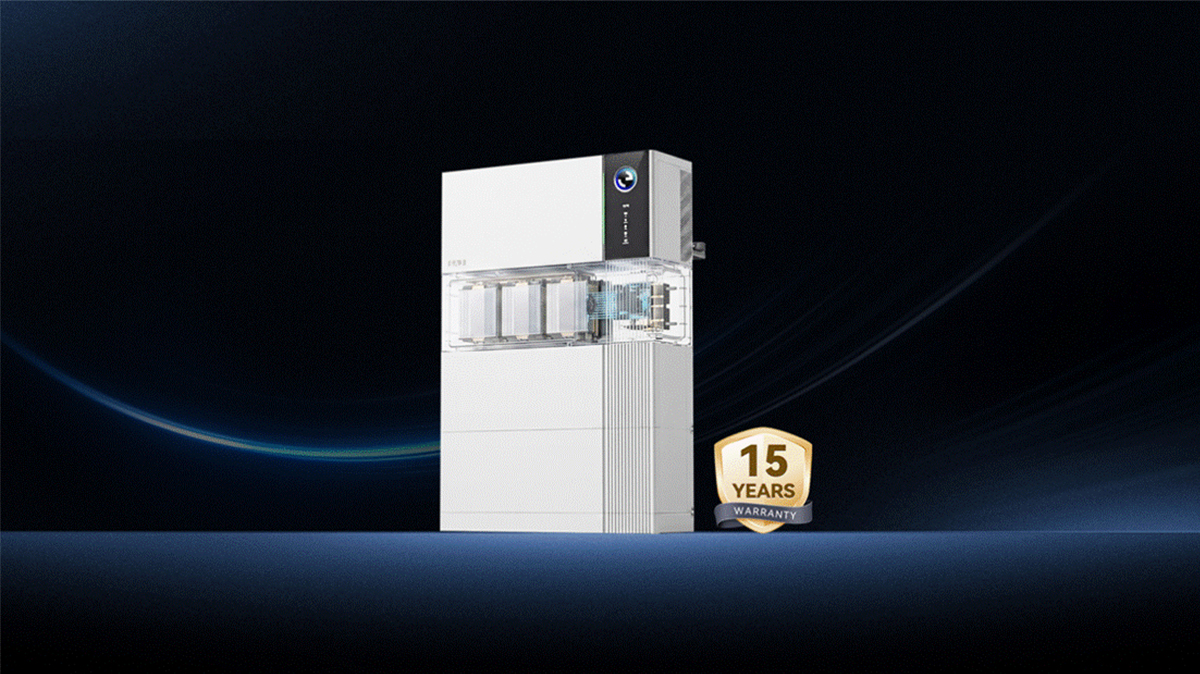

A home EV charger is no longer just a fixed-power outlet. In a connected Nordic home, it can respond to household demand, follow a schedule, coordinate with rooftop solar and give users a clearer view of charging energy. The hardware supplies power safely; software turns charging into a manageable part of the wider energy system.
This article explains the functions that make smart EV charging useful in Sweden and neighbouring Nordic markets—and the questions to ask before choosing a residential EV charger.
Digital maturity creates opportunity—and higher expectations
Nordic businesses are among Europe's leading adopters of AI technologies. Eurostat reported that 35.0% of Swedish enterprises with at least ten employees used AI in 2025. Denmark led at 42.0% and Finland reached 37.8%, while the EU average was 20.0%.
These are enterprise statistics, not a measure of household EV-charging preferences. They nevertheless provide useful context: smart-energy products in Nordic markets operate in an environment with strong digital capability. Users and installers have reason to expect connected equipment to be understandable, secure and genuinely helpful. An AI label alone is not enough.
What makes residential EV charging smart?
Dynamic load balancing
Dynamic load balancing measures or receives information about the property's current demand, then adjusts EV charging to help keep combined demand within the configured limit. If several high-power appliances operate at once, the charger can reduce power instead of continuing at a fixed maximum.
This function can help a household use available connection capacity more effectively, but it depends on correct metering, communications and commissioning. It does not increase the physical capacity of the electrical service.
Scheduled charging
Scheduling lets the household define when charging should occur or when the vehicle needs to be ready. This can avoid unnecessary competition with other loads and, where the electricity contract supports it, align charging with an appropriate tariff period. A useful schedule includes a practical fallback so the vehicle's mobility requirement remains the priority.
Solar and battery coordination
When the property has PV, adjustable charging can use more available solar generation. A compatible battery may shift some energy to a later charging window. The control system needs a coherent view of generation, storage, household consumption and charging; otherwise each device may optimise its own target while working against the whole home.
Remote visibility and control
An app can show charging status, energy use and the active mode, while allowing authorised users to update settings remotely. The interface should also explain interruptions: whether charging paused because of a schedule, load-balancing limit, lost connection or vehicle condition.
Authentication and access management
RFID or app authentication can help manage who uses a charger in shared residential or semi-public settings. Access roles should be configured deliberately, particularly when homeowners, installers and property managers require different permissions.
Where AI-assisted energy management can help
AI-assisted software may combine historical consumption, likely PV generation, charging demand and user preferences to support decisions. Depending on the system, it may identify patterns, forecast a suitable charging window or flag unusual behaviour for review.
The value comes from coordination, not autonomy for its own sake. A trustworthy system should show the user:
· which data informed the decision;
· which priority is active, such as departure time or solar use;
· whether charging power has been limited and why;
· how to override or adjust the setting;
· what happens if connectivity or a data source is unavailable.
The SAJ elekeeper energy management platform provides monitoring and control across compatible SAJ equipment. This creates a software layer through which users can understand connected generation, storage, consumption and EV charging rather than treating the wallbox as an isolated appliance.
Nordic installation considerations
Design for the property's actual electrical connection
Confirm the available phase arrangement, service capacity, earthing, protection and cable route before selecting charging power. An advertised 11 kW unit will not deliver 11 kW in every property or to every vehicle. The vehicle's onboard charger and system controls also set limits.
Plan for outdoor conditions
When a charger is installed outside, enclosure rating is only one part of the design. Mounting position, drainage, cable handling, impact risk, ambient operating range and the manufacturer's installation instructions all matter. A qualified installer should verify the complete site, not only the charger's IP rating.
Set a realistic winter charging plan
Cold conditions can affect vehicle energy consumption, battery conditioning and charging behaviour. Build extra time into winter schedules and use the vehicle manufacturer's recommendations. Avoid promising a fixed range gain per hour because actual results depend on the vehicle, temperature and active charging power.
Keep regional rules current
Electrical requirements, incentives, grid programmes and tariffs can change and may differ between municipalities, network areas and countries. Use current regional product documents and local professional advice at the time of installation.
Choosing between SAJ Caro and CU2
SAJ provides two distinct residential AC charging routes. The better choice depends on whether the project needs a flexible wallbox or an integrated charging module within a new home energy-storage architecture.
Caro Series for flexible residential charging
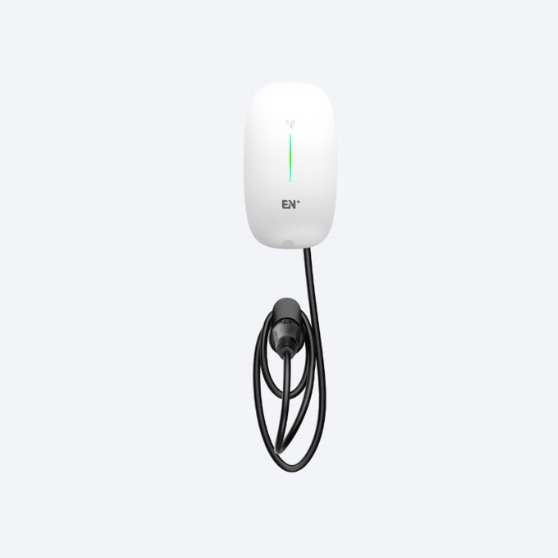
The SAJ Caro Series home wallbox offers 7 kW and 11 kW options, a standard 7 m Type 2 cable and wall- or pole-mount installation. Its highlighted functions include dynamic load balancing, automatic phase switching, RFID and app authentication, multiple communication methods and monitoring through elekeeper. PV-compatible modes and adjustable current can support better use of available solar generation. SAJ specifies IP65 for suitable indoor and outdoor use when installed according to requirements.
CU2 for an HS3-integrated energy system
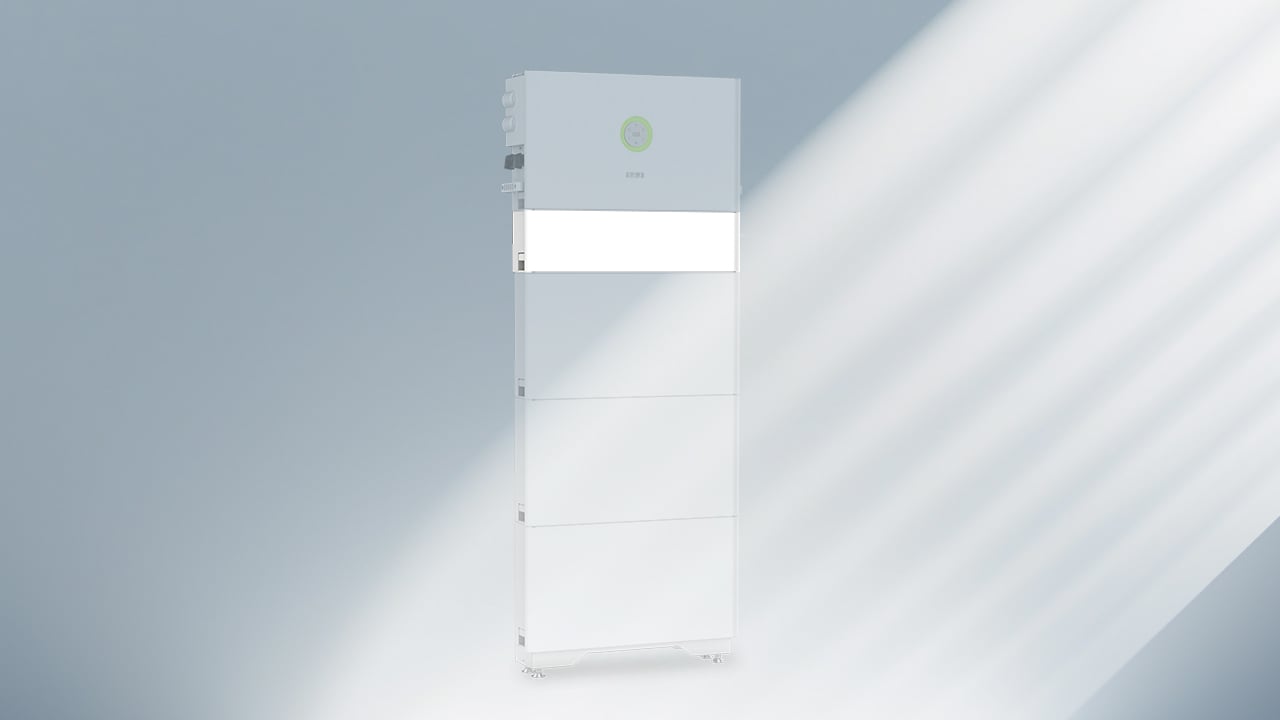
The SAJ CU2 smart AC EV charger is designed as a module within a compatible HS3 All-in-One home energy storage system. Available in 7.4 kW and 11 kW variants, it combines Solar–Storage–Charging integration with remote monitoring and control, scheduled charging, plug-and-play installation and a 7 m cable.
|
If the project needs... |
Start with... |
Reason |
|
A dedicated charger for a compatible new or existing energy system |
Caro Series |
Flexible wall/pole installation with load balancing, PV modes and elekeeper control |
|
A charger designed into a compatible HS3 All-in-One project |
CU2 |
Integrated Solar–Storage–Charging architecture and scheduled app control |
Confirm current product availability, regional documentation and vehicle compatibility before specifying either solution.
A five-step commissioning conversation
1. Define mobility needs: usual arrival time, departure deadline and energy required.
2. Map electrical limits: phase, service capacity, protection and other major loads.
3. Connect energy data: verify how solar, battery, household and charger measurements will be shared.
4. Choose priorities: departure readiness, solar use, tariff window and battery reserve.
5. Test exceptions: confirm behaviour during high household demand, lost connectivity and manual override.
This conversation turns “smart charging” from a marketing phrase into a set of verifiable behaviours.
Frequently asked questions
Does dynamic load balancing make charging slower?
It may temporarily reduce charging power when household demand is high. That controlled reduction is the point: it helps the charger work within the configured property limit. Charging can increase again when capacity becomes available.
Can smart charging guarantee the lowest electricity cost?
No. Cost depends on the electricity contract, tariff changes, charging demand and system configuration. Scheduling can help follow a chosen strategy, but savings should not be guaranteed without analysing the specific household.
Should every Nordic home choose an 11 kW charger?
No. The best rating depends on the vehicle's onboard charger, electrical connection, daily mileage, parking duration and energy-system design. A lower-power charger may fully meet the household's needs.
Make EV charging part of the home energy plan
Compare the SAJ residential EV charger portfolio, including Caro and the HS3-integrated CU2. For projects in Sweden and other Nordic markets, request current regional documentation and installer guidance.