.png)
In today's volatile energy landscape, businesses across commercial and industrial sectors are facing continuously rising electricity costs, supply chain challenges, and growing pressure for operational resilience. Whether you're developing a factory rooftop project, planning an industrial park microgrid, or powering a remote mining site or island resort, choosing the right solar system architecture directly impacts your project's ROI, long-term stability, and ability to meet sustainability targets.
Different projects have very different needs: stable urban grids prioritize cost savings, while remote or high-risk locations demand complete energy independence. Making the correct choice between grid-tied, off-grid, and hybrid solar systems is crucial for balancing budget, reliability, and future-proofing.
What Are the Three Main Types of Solar Power Systems?
Solar power systems are generally divided into three main categories based on how they interact with the utility grid and energy storage:
-
Grid-tied (on-grid) systems connect directly to the public electricity network.
-
Off-grid (standalone) systems operate completely independently.
-
Hybrid systems combine solar generation, battery storage, and grid connection intelligently.
Each type uses specialized inverters to convert solar energy into usable power, but they differ significantly in cost, flexibility, and reliability. Below is a clear breakdown of each.
Grid-Tied Solar System (On-Grid)
A grid-tied solar system uses a grid tied solar inverter (also called on grid solar inverter) to synchronize with the utility grid. It powers your loads during the day and exports excess electricity back to the grid, often benefiting from net metering policies. These systems usually require little to no battery storage, making them simpler and more affordable. However, they automatically shut down during grid outages for safety reasons.
Off-Grid Solar System
An off-grid solar system, also known as a standalone solar system, operates entirely independently of the utility grid. It relies on an off grid solar inverter and a substantial battery bank to store energy for use at night or during low sunlight periods. This type is ideal for remote areas, islands, mining sites, or any project where grid connection is unavailable or prohibited.
Hybrid Solar System
A hybrid solar system integrates solar PV, battery storage, and grid connection through a hybrid solar inverter or hybrid energy storage system. It can draw from or export to the grid, store surplus solar energy, and automatically switch between power sources for maximum efficiency and reliability. Thanks to its flexibility, hybrid solutions have become the fastest-growing option in the B2B solar market.
Grid-Tied vs Off-Grid vs Hybrid: Key Differences Explained
Selecting the right system involves weighing several key factors. Here's how the three types compare:
Initial Investment: Grid-tied systems have the lowest upfront cost since they often skip heavy battery requirements. Off-grid systems are the most expensive due to large storage needs. Hybrid systems offer a balanced middle ground.
Energy Independence: Off-grid provides complete independence, grid-tied offers almost none, while hybrid delivers smart, partial independence with grid backup.
Backup Power: Only off-grid and hybrid systems can continue supplying power during grid outages. Grid-tied systems go offline.
Maintenance: Grid-tied is the simplest to maintain. Off-grid and hybrid require more attention to batteries, though modern lithium solutions have greatly reduced this burden.
ROI: Grid-tied often delivers the fastest payback in stable grid areas. Hybrid excels in long-term returns through peak shaving and self-consumption. Off-grid ROI depends heavily on replacing expensive diesel generation.
In essence, grid-tied prioritizes cost efficiency, off-grid prioritizes full independence, and hybrid offers the best balance for most commercial projects.
Comparison Table of Solar System Types
| Feature | Grid-Tied | Off-Grid | Hybrid |
| Grid Connection | Yes | No | Yes |
| Battery Required | Optional (usually none) | Required | Required |
| Power During Outage | No | Yes | Yes |
| Cost Level | Low | High | Medium |
| Best For | Urban projects, stable grids | Remote areas, islands, no-grid sites | Commercial & industrial, microgrids |
This comparison clearly shows why many businesses are moving toward hybrid systems as energy markets become more complex.
Which Solar System Is Best for Commercial & Industrial Projects?
For factories, warehouses, industrial parks, and commercial buildings, the optimal choice depends on your location, energy consumption pattern, and business priorities.
When to Choose Grid-Tied Systems
Grid-tied systems powered by grid tied solar inverter or on grid solar system are ideal in areas with reliable grid infrastructure and favorable net metering policies. They work especially well for factories with high daytime loads, helping significantly reduce electricity bills with fast return on investment and minimal upfront cost.
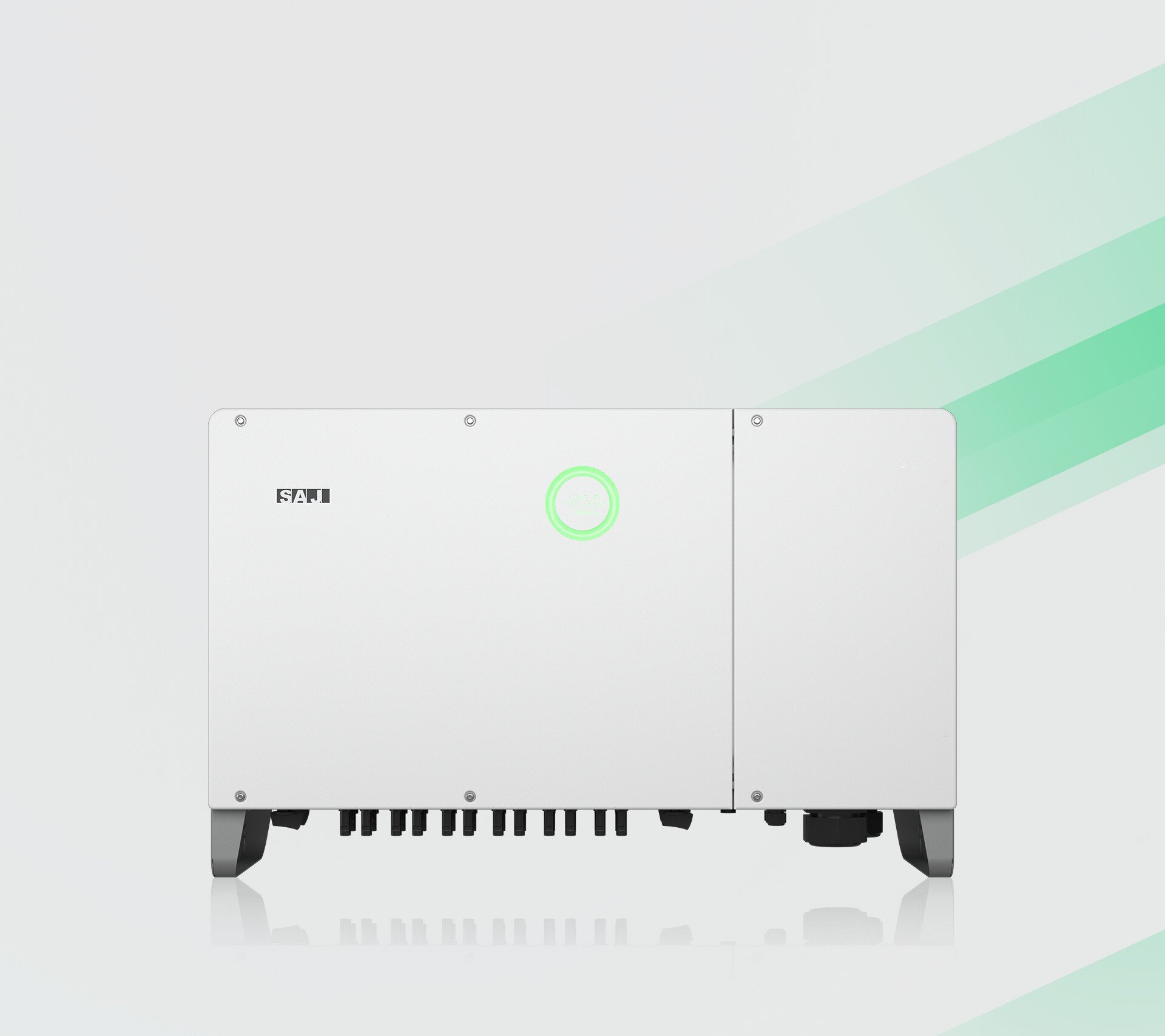
SAJ provides high-performance C&I string inverters specifically designed for grid-tied commercial and industrial applications. With a focus on smart energy management, high reliability, and superior efficiency, SAJ solutions help factories and large facilities maximize solar yield while maintaining stable system operation and easy monitoring.
The core C6 Series covers the 75kW–125kW power range, making it well-suited for medium to large-scale C&I installations. It delivers a maximum conversion efficiency of up to 98.8%, ensuring higher energy harvest even under complex operating conditions. Designed to be compatible with high-power PV modules, the C6 series supports flexible system design, reduces BOS (Balance of System) costs, and improves overall ROI for grid-tied solar projects.
When to Choose Off-Grid Systems
Choose off-grid systems using off grid solar inverter or standalone solar system when your project has no access to the utility grid — such as remote mines, farms, or sea islands. These systems ensure full autonomy but require careful sizing of batteries and backup components.
When to Choose Hybrid Systems
Hybrid systems have become the preferred solution for commercial and industrial (C&I) projects. Equipped with advanced energy storage inverter technology and designed as hybrid inverter system for C&I, they enable:
-
Peak shaving and demand charge reduction
-
Microgrid development
-
Arbitrage on peak-valley electricity pricing
-
UPS-level backup for critical operations
SAJ’s C&I integrated energy storage solutions comprehensively address all the above scenarios by combining solar PV, energy storage, power conversion, and intelligent energy management into a unified platform. This one-stop system design simplifies deployment while significantly improving energy efficiency, safety, and operational stability for industrial users.
The SAJ C&I All-In-One Energy Storage System delivers a fully integrated architecture that supports multiple operating modes such as self-consumption, time-of-use optimization, and backup power supply. With advanced DC-coupled design, intelligent EMS control, and multi-layer safety protection, it ensures reliable performance even in demanding industrial environments.
Why Hybrid Solar Systems Are Becoming the Global Trend
Hybrid solar systems are experiencing the fastest growth in industrial solar markets due to several converging factors:
-
Increasing electricity price volatility and complex time-of-use tariffs
-
Growing concerns over grid instability and frequent outages
-
Corporate ESG commitments and carbon neutrality targets
-
Rapidly declining costs of battery storage technology
As a result, hybrid has become the smartest choice for businesses seeking both cost savings and energy resilience.
How SAJ Hybrid Inverters Support Different Solar System Architectures Energy Storage System
As a leading commercial solar inverter manufacturer and energy storage inverter supplier, SAJ Electric offers versatile, high-performance inverters that adapt seamlessly to grid-tied, off-grid, and hybrid architectures.
SAJ's SAJ hybrid inverter series delivers:
-
Strong grid-tied support with efficient power export and net metering compatibility
-
Reliable off-grid capability for standalone operation
-
Hybrid intelligent switching with ultra-fast transition between on-grid and off-grid modes
-
Excellent battery compatibility with both LFP lithium and lead-acid systems
-
Advanced EMS (Energy Management System) for intelligent optimization of solar generation, storage, and consumption
These features allow project developers to build flexible, scalable, and future-proof energy solutions.
To further support different C&I application scenarios, SAJ also offers a complete portfolio of integrated energy storage solutions:
CHS2 Series All-in-One Hybrid Energy Storage System (CH2 & CB2)
A modular plug-and-play system designed for self-consumption, peak shaving, peak-valley arbitrage, and backup power. The system supports scalable capacity from 60kWh up to 4MWh, making it suitable for a wide range of commercial and industrial projects.
CM2 Series Smart C&I All-in-One Energy Storage System (BESS)
A highly integrated solution that combines battery pack, PCS, BMS, EMS, thermal management, and fire protection into a compact system, enabling fast installation and simplified operation.
CH3 Series Hybrid Inverter + CB3 Battery System
A next-generation 1500V DC C&I hybrid platform featuring ultra-fast backup switching within 20ms and strong PV oversizing capability, designed for large-scale commercial and industrial applications.
-2.jpg?width=2360&height=833&name=CH3%E4%BA%A7%E5%93%81%E6%B5%B7%E6%8A%A5--PC-1200x818px(1)-2.jpg)
Together, these solutions form a complete ecosystem that helps C&I users maximize solar utilization, improve energy resilience, and reduce overall electricity costs.
Real Application Scenarios
Industrial Parks & Factories
Hybrid systems with SAJ inverters excel at peak shaving and demand charge reduction, storing solar energy during the day and releasing it during expensive peak hours to significantly lower electricity costs.
Commercial Buildings
In offices, shopping centers, and warehouses, hybrid setups provide reliable backup power during outages while enabling smart energy optimization throughout daily operations.
Remote & Island Projects
For off-grid or weakly connected sites, SAJ solutions deliver robust off-grid autonomy, ensuring continuous power even in challenging environments, with optional generator integration when needed.
SAJ C&I energy storage solutions are designed to be modular, efficient, and highly adaptable, making them easy to deploy across different commercial and industrial scenarios. From small workshops to large industrial parks, they help reduce peak electricity costs, improve energy efficiency, and ensure stable operation with built-in safety and reliability. With a plug-and-play design and flexible scalability, SAJ makes energy storage simpler to integrate and more effective to manage, turning energy into a long-term business advantage with higher profitability, higher efficiency, and higher safety.
-2.jpg?width=1920&height=1740&name=CH3%E4%BA%A7%E5%93%81%E6%B5%B7%E6%8A%A5--%E5%B9%B3%E6%9D%BF-586x531px(1)-2.jpg)
How to Choose the Right Solar System?
Choosing the right solar system ultimately comes down to three key factors: your budget, desired level of energy independence, and reliability requirements.
-
Grid-tied = Best for cost efficiency in stable grid areas
-
Off-grid = Ideal for full independence where grid access is impossible
-
Hybrid = The balanced, future-proof solution that delivers both savings and resilience
For most commercial and industrial projects today, hybrid systems offer the optimal path forward.
Looking for a reliable hybrid solar inverter solution for your next energy project? Contact SAJ Electric today to explore cooperation opportunities. Our expert team is ready to support you with tailored energy storage inverter solutions that perfectly match your technical and commercial goals.